|
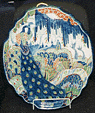
This Porceleyne Fles plaque with a peacock and peahen dates from 1922.
|
|
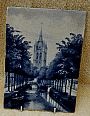
This is a
Porceleyne Fles tile from 1890 depicting
a canal scene by the Oude Kerk in Delft.
|
|
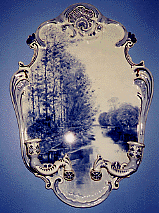
A very rare
Porceleyne Fles
applique/double-armed candlestick sconce from 1895.
|
|
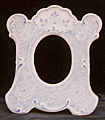
A delicate
Porceleyne Fles photo frame from 1887.
|
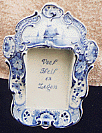
|
A 1928
Porceleyne Fles
calendar block.
The inscription, "Veel heil en Zegen" translates as
"A happy/blessed New Year", and would be revealed only at
the end of the old year.
|
|
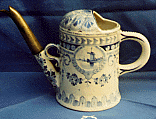
A 1898
Porceleyne Fles
watering can with pewter spout.
|
|
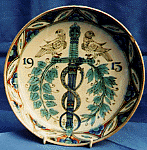
A colourful
Porceleyne Fles
plate from 1913, commemorating the opening of the
Peace Palace in den Haag.
Porceleyne Fles called this style of plate Nieuw-Delfts.
|
|
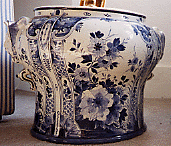
A magnificent
Porceleyne Fles
palm pot from 1892. It stands 35cm high and has a 42cm diameter.
|
|
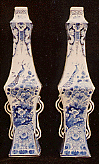
A rare pair of
Porceleyne Fles
vases from about 1901. They demonstrate a movement from an Art Nouveau style
to what would become the Dutch Art Deco style.
|
|
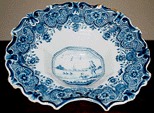
This is an 18th Century barber's shaving dish.
|
|
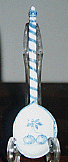
An extremely rare Delftware spoon from the early 18th century.
Few articles like this were made, and very few have survived.
|
|
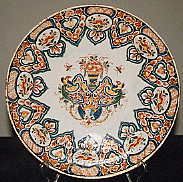
An 18th century polychrome (multi-coloured) Delft plate with intricate painting.
|
|
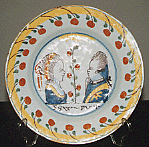
This early Royal plate celebrates the House of Orange --- the Dutch Royal family.
|
|
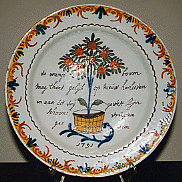
A Royal plate from 1791.
|
|
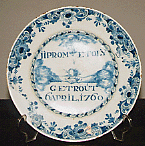
Marriage plates were usually commissioned by wealthy families to celebrate a wedding. This one is dated 1760.
|
|
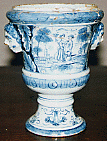
A fine example of a footed pot with Dutch and Oriental decorative motifs.
|
|
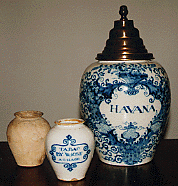
Tobacco was typically kept in special pots or jars such as these 18th century ones.
Brass covers were often used (see the large pot).
|
)
)
)
)
)
)
)
)
)
)
)
)
)
)
)
)
)